

You care about your car’s finish and want protection that actually works without changing its look. Paint protection film (PPF) is a thin, transparent polyurethane layer that guards your paint from rock chips, scratches, bugs, and environmental stains while preserving factory gloss and color. If you want durable, nearly invisible protection that reduces repair costs and keeps your vehicle looking newer longer, PPF delivers that in a way waxes and ceramic coatings can’t.
This article Paint Protection Film for Cars will walk you through how PPF works, what it protects against, and how to choose the right coverage and upkeep plan for your vehicle and budget. Expect clear guidance on film types, coverage options, installer versus DIY trade-offs, and simple maintenance steps that keep the film performing as intended.
Understanding Automotive Clear Protective Films
You’ll learn how clear films physically protect paint, the main material types used, and recent self-healing improvements that affect durability and maintenance. Expect concrete details about thickness, performance trade-offs, and what to look for when choosing film.
How It Works to Guard Vehicle Paint
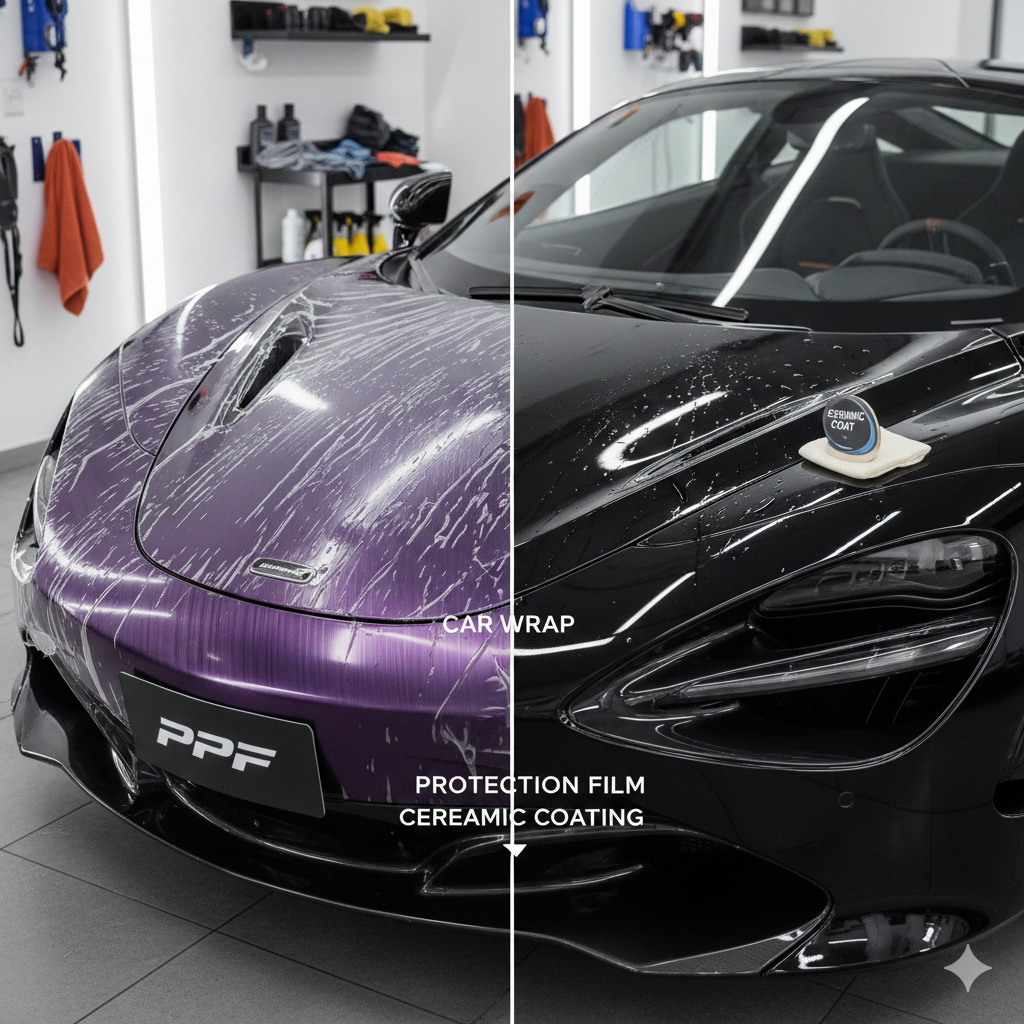
Paint protection film (PPF) sits on top of your clearcoat as a sacrificial layer that absorbs impact from stone chips, bug strikes, and light abrasions. Typical installation uses an adhesive that bonds to the clearcoat without reacting chemically; installers often use heat and wet-sanding techniques to conform the film around curves and edges.
PPF thickness normally ranges from about 6 to 12 mils (0.15–0.30 mm). Thicker films provide more impact resistance but can be harder to install invisibly; thinner films conform better to complex shapes but offer less blunt-force protection. Films also include UV stabilizers and hydrophobic topcoats to reduce yellowing and repel contaminants.
Types of Polyurethane and Vinyl Films
Most modern PPFs use thermoplastic polyurethane (TPU). TPU offers elasticity, abrasion resistance, and clarity; it resists yellowing when formulated with UV inhibitors. Vinyl films (PVC-based) still appear in lower-cost wraps but generally lack TPU’s self-healing and abrasion resistance qualities.
Key comparison points:
- Material: TPU vs. PVC
- Typical thickness: TPU 6–12 mils, vinyl varies
- Durability: TPU > vinyl for chips and scuffs
- Clarity & gloss: TPU maintains factory finish longer
You should verify OEM compatibility, adhesive type (pressure-sensitive vs. repositionable), and manufacturer warranty. Those specs tell you how the film will behave during installation and over years of exposure.
Advancements in Self-Healing Technology
Self-healing topcoats use either heat-activated polymers or specially formulated clearcoats that flow to close minor scratches. Modern TPU films incorporate micro-molecular networks that restore surface smoothness at ambient or slightly elevated temperatures—direct sunlight or warm water often triggers visible improvement.
Manufacturers now balance fast healing and long-term hardness to avoid premature softening that attracts dirt. You should note healing time (minutes to hours), required temperature, and whether the film needs periodic reapplication of a maintenance product. These parameters affect real-world upkeep and the film’s ability to stay clear and blemish-free.
Selecting the Right Coverage and Maintenance Strategies
Decide how much of your vehicle you want protected and plan a maintenance routine that preserves both the film and the original paint. Consider driving habits, resale plans, and local conditions when choosing coverage and cleaning products.
Comparing Partial Versus Full-Body Protection
Partial coverage typically protects high-impact zones: front bumper, hood, fenders, mirrors, and sometimes rocker panels. It costs less and targets the areas most exposed to stone chips and road debris, making it a practical choice if you drive mainly on paved roads.
Full-body coverage wraps the entire vehicle, including doors, roof, and trunk. It prevents edge-to-edge fading from UV, paint swirl marks from washing, and accidental door dings that partial kits leave exposed. Full coverage benefits long-term owners and leased cars with strict return standards.
Estimate costs and weigh them against likely damage. If you park on the street or travel gravel roads frequently, full-body often yields better value. For short-term ownership or city-only use, partial protection usually suffices.
Impact on Original Paint and Finish
Quality film preserves OEM paint by absorbing rock chips and most light abrasions, leaving the factory finish intact underneath. Professional installation reduces the risk of trapped contaminants or lift at edges that can cause staining or moisture intrusion.
Lower-quality films can yellow, crack, or delaminate and may require removal sooner, which risks chipping if removal is rushed or done improperly. Choose a film with proven UV stability and hydrophobic topcoat to minimize visual changes over time.
Removal typically leaves paint unharmed when the underlying surface was prepped correctly and the paint was professional. If your paint already has clearcoat damage, film may hide defects but won’t repair them; address underlying issues before installation.
Care Tips and Recommended Cleaning Products
Wash the film regularly with pH-neutral car shampoo and a soft microfiber mitt. Avoid automatic brush washes and abrasive pads; they create swirl marks and accelerate edge lift.
Dry with a clean microfiber towel or a squeegee to prevent water spots. For stubborn contaminants (tar, tree sap, bird droppings), use a dedicated PPF-safe solvent or isopropyl alcohol diluted per product instructions and rinse promptly.
For maintenance, apply a silicone-free, PPF-approved ceramic or sealant product every 6–12 months to restore hydrophobic properties. Avoid waxes containing abrasives or petroleum distillates.
Recommended product types:
- pH-neutral car wash soap (dilution per label)
- PPF-safe bug & tar remover
- Isopropyl alcohol 70% for spot cleaning (test first)
- Non-abrasive ceramic sealant labeled safe for PPF
Inspect edges and seams monthly for lifting or dirt accumulation. Address small lifts promptly with your installer to prevent dirt ingress and adhesive failure.