


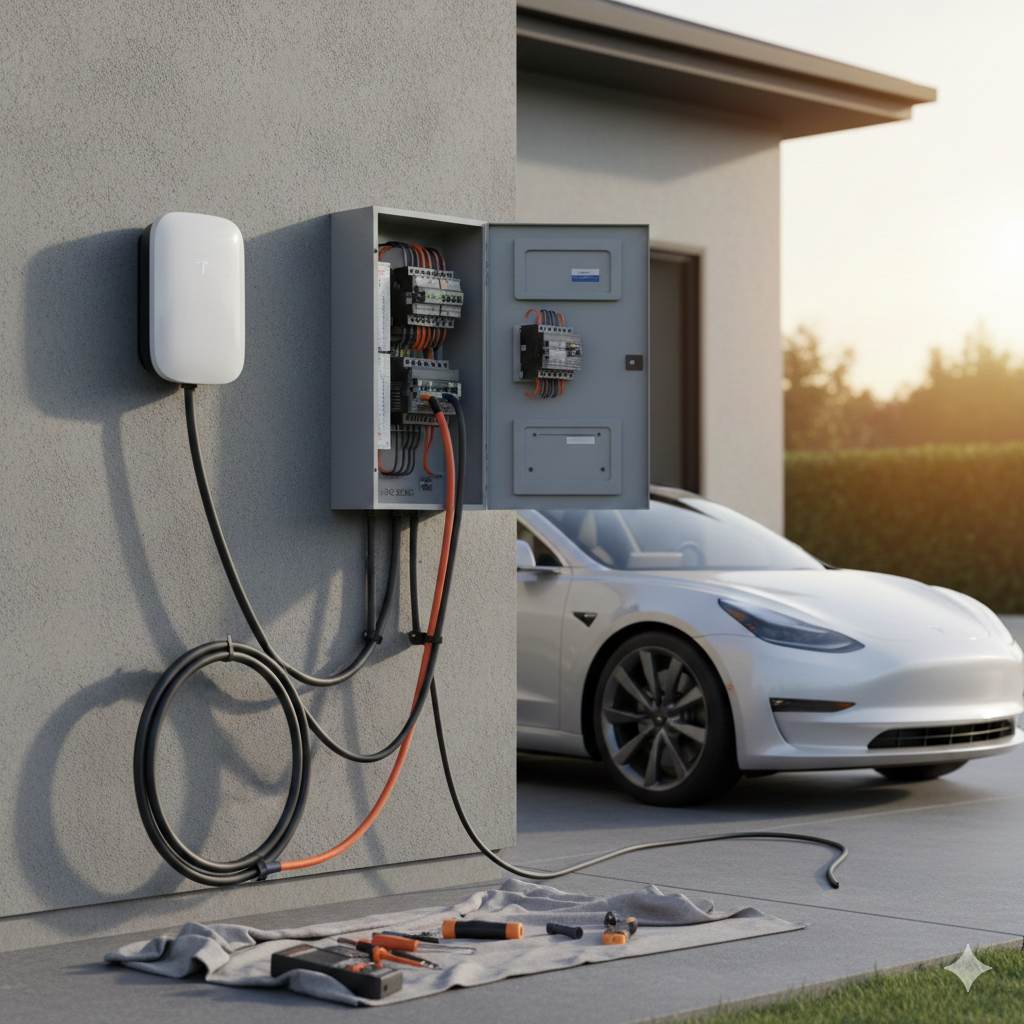
Finding a qualified EV charging installer near me shouldn’t feel like guesswork. You can quickly locate local installers who assess your electrical setup, recommend the right Level 2 or smart charger, and handle permits and installation to get your home charging reliable and safe.
This post ev charging installer walks through the types of chargers available and what to expect from installers so you know which solution fits your home or multi-unit building and how to vet technicians and companies for proper credentials, experience, and permits. You’ll learn practical steps to compare quotes, spot red flags, and shorten the time from purchase to working charger.
Types of EV Charging Solutions
You’ll find distinct options for charging at home, at businesses, and on public networks. Each option differs by power level, installation complexity, and cost, so choose based on vehicle range needs, parking type, and utility or site constraints.
Home Charging Installation Options
Home installs typically center on Level 2 (240V) chargers and occasional Level 1 (120V) use. Level 2 delivers 20–60 miles of range per hour and suits most daily needs; you’ll pick amperage (30A–60A) based on circuit capacity and charging speed you want.
You can mount chargers on a garage wall, a dedicated pedestal in a driveway, or on shared parking posts in condos. Hardwired units require a licensed electrician to run a new 240V circuit, install a dedicated breaker, and confirm panel capacity and grounding.
Consider smart features: Wi‑Fi, scheduling, and load management let you shift charging to off‑peak hours or integrate with solar. Expect permit and inspection processes in many jurisdictions; get quotes that itemize labor, conduit runs, and any panel upgrades. If you rent or live in multifamily housing, request landlord approval and explore turnkey installers that handle permitting and rebates.
Commercial Charging Station Setups
Commercial sites use Level 2 units for employee/customer parking and DC fast chargers for high‑turnover locations. Level 2 stations cost less per unit and support long dwell times, while DC fast chargers (50 kW–350 kW) supply rapid top‑ups for retail corridors and fleet depots.
Design considerations include site power capacity, three‑phase service requirements, concrete pads or bollards for pedestals, and trenching for conduit. You’ll need network management software for billing, access control, and remote diagnostics.
Factor in ADA access, lighting, signage, and EV parking enforcement. Incentives and utility programs often offset infrastructure costs; many installers (commercial specialists) coordinate utility interconnection, load studies, and grant applications. For fleets, prioritize depot charging schedules, charger redundancy, and fleet telematics integration.
Public Charging Network Integration
Public network integration ties hardware to roaming platforms, payment systems, and real‑time availability data. Networked chargers broadcast status to apps, enable per‑kWh or per‑session billing, and support user authentication via RFID, app, or credit card.
Operators choose open protocols (OCPP) and CMS providers to ensure interoperability with mapping services and aggregator networks. You must plan for cybersecurity, firmware update paths, and remote fault reporting to minimize downtime.
Site hosts often contract with network operators who install and maintain equipment under revenue‑share or hosting agreements. For high‑usage locations, implement predictive maintenance, cellular backup, and queuing strategies to keep uptime high and user experience consistent.
Selecting Qualified Electricians and Providers
You need installers who meet local electrical code, have hands-on EV charger experience, and provide transparent quotes with itemized costs. Verify credentials, inspect past EV installations, and compare written estimates before you commit.
Certification and Licensing Considerations
Confirm the electrician holds a valid state or provincial electrician license and is bonded and insured. Ask for the license number and verify it on your government licensing site; this protects you if work doesn’t meet code or if a worker is injured on your property.
Look for additional certifications specific to EV work, such as manufacturer-certified installer status (Tesla, ChargePoint, etc.) or specialized EV charging certifications from recognized trade organizations. These certifications indicate training on charger-specific wiring, firmware integration, and safety procedures.
Require proof of general liability insurance and worker’s compensation. If you live in a multi-unit or commercial setting, confirm the installer understands any accessibility or building-code requirements that apply to public chargers.
Reviewing Experience With EV Chargers
Ask how many residential Level 2 and commercial installations the installer has completed in the last 12 months. Request photos, client references, and examples of similar projects—especially ones with comparable electrical panels, garage layouts, or parking configurations to yours.
Probe for troubleshooting experience: ask how they addressed panel upgrades, meter relocation, or conduit runs in past jobs. Inquire whether they handle permit filing and coordinate inspections; installers who manage permitting reduce delays and ensure code compliance.
Check if the installer can integrate chargers with home energy management systems, smart charging apps, or load-sharing setups. Confirm experience with the charger brand you plan to buy or willingness to certify on it before installation.
Comparing Local Installer Pricing
Obtain at least three written estimates that break out labor, parts (breaker, conduit, wiring), permit fees, and any panel upgrade costs. Compare unit prices and the number of labor hours; a low total could hide extra hourly charges or omitted permit work.
Watch for fixed-price versus time-and-materials bids. Fixed-price bids protect you against scope creep; time-and-materials may be reasonable for complex jobs but require clear hourly rates and caps. Ask whether the quote includes a post-installation inspection and commissioning test.
Factor in warranty terms and post-installation support when comparing price. A slightly higher bid that includes manufacturer-certified commissioning or a 1-year workmanship warranty often saves you money and hassle down the road.